A crown is often recommended after root canal treatment when a tooth has lost significant structure or needs protection from chewing forces, particularly for premolars and molars. However, not every root-treated tooth automatically needs a crown. The decision depends on the tooth’s location, how much healthy structure remains, existing restorations, cracks and your bite.
If you have been told you need both a root canal and a crown, it is understandable to wonder why two treatments are necessary.
Root canal treatment and a dental crown do different jobs. The root canal treats damaged or infected tissue inside the tooth. The restoration placed afterwards repairs and protects the remaining tooth structure so you can continue using the tooth.
For some teeth, that restoration is a crown. For others, a filling or another appropriate restoration may be suitable.
Do You Always Need a Crown After Root Canal Treatment?
No. A crown is not automatically required after every root canal.
After root canal treatment, your dentist needs to decide how the tooth should be restored. The main factors include:
- which tooth has been treated
- how much natural tooth remains
- how large any previous fillings are
- whether the tooth is cracked or fractured
- how much chewing pressure the tooth receives
- whether there is enough sound tooth structure to support a filling
- how the tooth fits into your bite
The choice between a filling and a crown after root canal treatment is therefore made tooth by tooth.
A relatively intact front tooth may sometimes be restored differently from a heavily filled back molar that needs to withstand strong chewing forces.
Why Might a Crown Be Recommended After a Root Canal?
Root canal treatment itself does not necessarily make every tooth require a crown.
The bigger issue is often why the tooth needed root canal treatment in the first place.
Many root-treated teeth have already lost considerable structure because of:
- deep tooth decay
- a large existing filling
- a crack
- fracture
- trauma
- previous dental treatment
Once damaged or decayed material has been removed, there may be less natural tooth structure remaining to withstand everyday chewing.
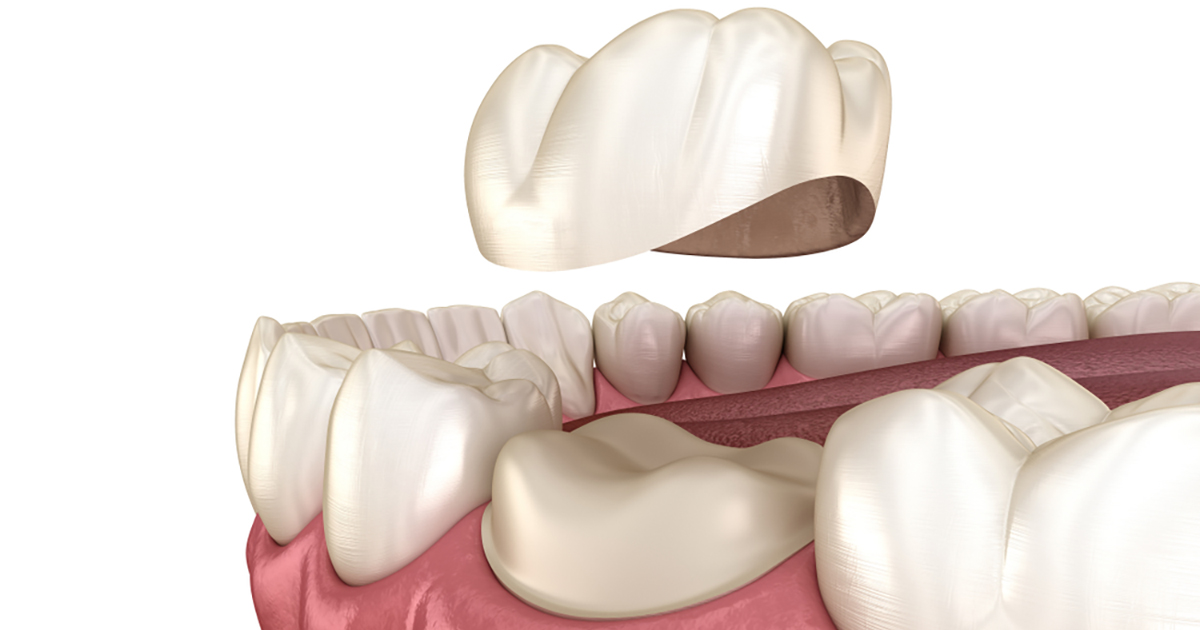
A dental crown covers and protects the prepared visible portion of a tooth. This can be particularly useful when the remaining tooth needs more extensive support than a filling can provide.
At Oakstone Dental, the aim is not simply to place a crown because a root canal has been completed. The condition of the tooth needs to justify the restoration.
Root Canal and Crown: A Simple Treatment Timeline
The exact number and timing of appointments vary, but treatment often follows this general sequence:
| Stage | What usually happens |
| 1. Assessment | The tooth, symptoms and X-rays are assessed to determine whether root canal treatment is appropriate and whether the tooth can be restored. |
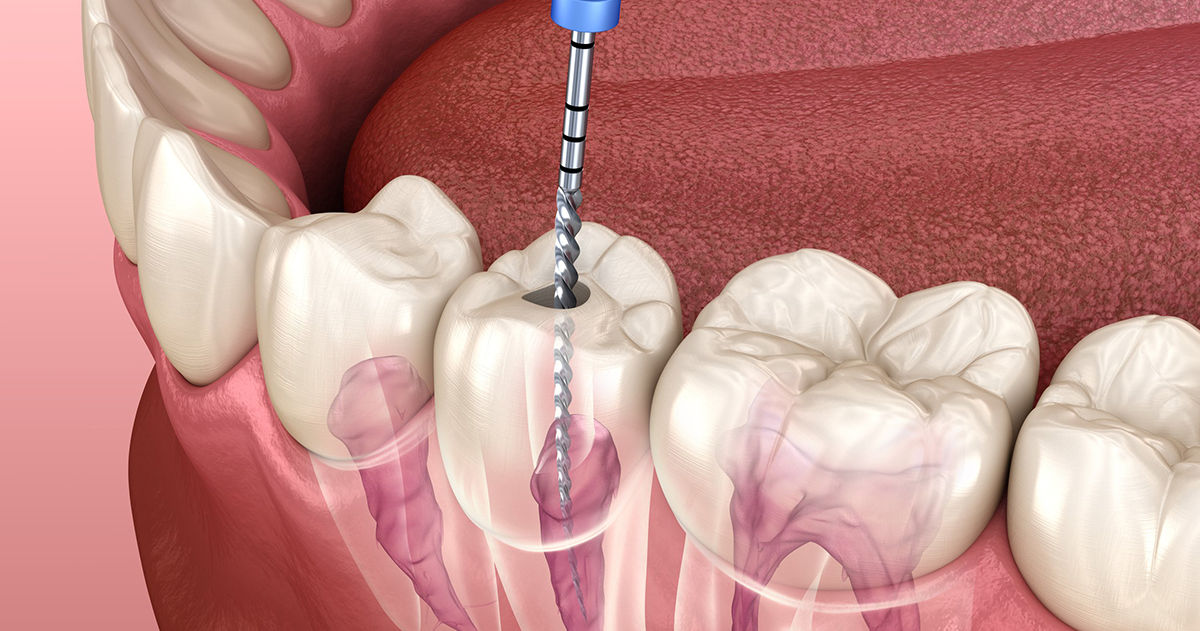
| 2. Root canal treatment begins | The tooth is numbed and the infected or damaged pulp is removed. The canals are cleaned and shaped. |
| 3. Temporary restoration if needed | If treatment requires more than one visit, the tooth may be sealed temporarily between appointments. |
| 4. Root canal is completed | The cleaned canals are filled and sealed. |
| 5. Final restoration | Depending on the tooth, a filling, crown or another suitable restoration is placed to restore and protect it. |
| 6. Ongoing care | The tooth is monitored as part of your regular dental care. |
Oakstone Dental generally completes root canal treatment over two or three appointments, depending on the individual tooth and treatment required.
Do Back Teeth Usually Need Crowns After a Root Canal?
Crowns are commonly considered for premolars and molars after root canal treatment.
These teeth perform much of the heavy chewing in your mouth. They also often have larger fillings by the time root canal treatment becomes necessary.
The combination of substantial chewing pressure and reduced remaining tooth structure can increase the need for a restoration that covers and protects the tooth.
For this reason, crowns are commonly recommended for root-treated premolars and molars.
That still does not mean every back tooth receives exactly the same treatment. Your dentist needs to assess how much healthy tooth remains and whether cracks, existing restorations or other factors change the recommendation.
Do Front Teeth Need Crowns After Root Canal Treatment?
Not always.
Front teeth generally experience different forces from molars and premolars, and some may retain enough healthy structure to be restored without a full crown.
For example, a front tooth that required root canal treatment after trauma but still has substantial healthy tooth structure may have different restorative needs from a heavily decayed molar.
A crown may nevertheless be considered if a front tooth:
- has lost substantial structure
- has a large existing restoration
- is cracked or fractured
- requires additional structural support
- needs restoration for both functional and appearance-related reasons
The key question is not simply “front tooth or back tooth?” It is “how much healthy, reliable tooth structure is left?”
How Soon Should You Get a Crown After a Root Canal?
If a crown has been recommended, your dentist will advise when the tooth is ready for its final restoration.
Root canal treatment may take more than one appointment, particularly when the canals need additional cleaning or medication between visits. A temporary filling may be used during this period.
Once treatment is complete, the tooth should not simply be left with a temporary restoration indefinitely. A secure final restoration helps protect the treated tooth and reduces the opportunity for bacteria to contaminate the root canal system again.
Problems with or delays in the final restoration can affect a previously root-treated tooth, so follow the timing recommended for your individual treatment.
There is no universal rule such as “every crown must be fitted exactly one week after a root canal”. Timing depends on:
- whether the root canal has been completed
- whether symptoms are settling
- the condition of the tooth
- whether additional restorative work is necessary
- the type of final restoration being made
What Happens Between the Root Canal and the Crown?
If the tooth is not receiving its final restoration immediately, it may have a temporary filling or temporary restoration.
During this period, take care of the tooth as instructed by your dentist.
A tooth awaiting its final restoration may not have the same protection as it will once treatment is complete.
You should contact your dentist if:
- the temporary filling comes out
- part of the tooth breaks
- pain becomes significantly worse
- swelling develops
- the tooth becomes uncomfortable to bite on
- you are concerned about a change in your symptoms
Avoid deliberately testing the tooth with very hard foods while it is still undergoing treatment.
What Happens When the Crown Is Placed?
If a crown is the recommended final restoration, the remaining tooth is prepared so the crown can fit over it.
The procedure generally involves:
- reshaping the tooth
- taking an impression or digital scan
- recording information needed to make the crown
- placing a temporary crown where required
- fitting and checking the permanent crown
- cementing or bonding it into position
You can read a more detailed explanation of the dental crown procedure if you want to know what happens during the crown appointments themselves.
Oakstone Dental also provides information specifically about dental crown treatment.
Can You Have a Root Canal Through an Existing Crown?
Sometimes, yes.
A tooth can develop pulp inflammation or infection even if it already has a crown. When that happens, having an existing crown does not automatically prevent root canal treatment.
In an appropriate case, the dentist or endodontist may be able to create an access opening through the existing crown to reach the root canals inside the tooth.
Once the root canal treatment is complete, that access opening needs to be securely restored.
However, keeping the existing crown is not always the best or even a possible option.
When Might an Existing Crown Need to Be Removed or Replaced?
The dentist needs to assess both the tooth and the crown.
Removing or replacing the crown may be considered if:
- there is decay underneath or around the crown
- the crown is loose
- the crown is cracked or damaged
- the crown no longer fits adequately
- the dentist needs better access to the tooth
- the restoration prevents proper assessment of the tooth underneath
- the crown is damaged during access
- the remaining tooth needs a different restoration after treatment
For root canal retreatment, existing crowns and other restorative materials sometimes need to be removed to gain suitable access.
In other situations, accessing the root canal through a clinically acceptable existing crown may be considered.
The decision should be made after examining the crown, tooth and X-rays rather than assuming in advance that the crown can definitely be saved or definitely needs replacing.
Why Would a Crowned Tooth Need a Root Canal?
A crown protects and restores a tooth, but it does not make the natural tooth underneath immune to future problems.
A crowned tooth may later require root canal treatment because of:
- decay reaching the pulp
- a crack or fracture
- trauma
- inflammation or infection of the pulp
- leakage or problems around an older restoration
- damage that was not previously affecting the pulp
A crown can also become loose, fractured or develop decay around its margins over time.
This is why teeth with crowns still need regular brushing, cleaning between the teeth and dental examinations.
Does Root Canal Treatment Hurt?
Root canal treatment is carried out using local anaesthetic to numb the treatment area.
The purpose of the procedure is to remove inflamed, damaged or infected pulp tissue from inside the tooth, then clean and seal the root canal system.
During root canal treatment, local anaesthetic and a rubber dam are commonly used to help keep treatment comfortable and isolate the tooth.
Individual experiences differ, especially when a tooth is already inflamed or infected.
Tell your dentist if you experience discomfort during treatment rather than trying to tolerate it.
What Does Recovery Feel Like After a Root Canal?
Some tenderness or discomfort can occur after root canal treatment as the tooth and surrounding tissues settle.
You may notice:
- mild tenderness when biting
- sensitivity around the area
- some soreness after the anaesthetic wears off
- an awareness of the temporary filling or restoration
Symptoms should generally improve rather than progressively worsen.
Contact your dentist if:
- pain becomes increasingly severe
- swelling appears or increases
- you develop fever or feel unwell
- the temporary restoration falls out
- your bite feels significantly different
- symptoms are not settling as expected
General recovery after root canal treatment varies between patients, so follow the instructions provided for your individual case.
Does Getting the Crown Hurt After a Root Canal?
Local anaesthetic may also be used while the tooth is being prepared for a crown.
Because the pulp has been removed during a completed root canal, the internal nerve tissue of that tooth is no longer responding in the same way as a vital tooth. However, the tissues around the root and gums are still living tissues and can respond to pressure or irritation.
Some gum tenderness or awareness of the tooth can occur after crown preparation and fitting.
A final crown should allow you to bite comfortably. If the crowned tooth feels noticeably high or painful when you bite, contact your dentist for assessment.
Crown vs Filling After a Root Canal
The choice is not about whether crowns are universally “better” than fillings.
They provide different levels of restoration.
A Filling
A filling restores a portion of the tooth.
It may be considered when:
- enough sound natural tooth remains
- the tooth does not need full coverage
- the position and biting forces make a direct restoration appropriate
A Crown
A crown covers the prepared visible portion of the tooth.
It may be considered when:
- substantial tooth structure has been lost
- a large previous filling has weakened the tooth
- the tooth is cracked
- greater protection from chewing forces is needed
- a back tooth requires more extensive restoration
Your dentist should explain why one option is being recommended for your tooth rather than simply telling you that every root canal automatically needs a crown.
What If There Is Not Enough Tooth Left for a Crown?
Before root canal treatment and crown treatment are planned, the dentist needs to consider whether the tooth can be predictably restored.
A crown still needs adequate support from the remaining tooth and restorative foundation.
If significant tooth structure has been lost, additional restorative work may sometimes be necessary before a crown can be placed.
In other cases, damage may be so extensive that retaining the tooth is no longer considered predictable.
This is an important part of the initial assessment. There is little value in completing complex treatment on a tooth that cannot ultimately be restored to useful function.
What Are the Alternatives to a Crown After Root Canal Treatment?
If full crown coverage is not required, your dentist may recommend a filling or another appropriate restoration.
Which option is suitable depends on:
- remaining natural tooth structure
- tooth position
- cracks or fractures
- existing fillings
- biting forces
- appearance
- long-term restorative needs
The alternative to root canal treatment itself is different. If an infected or damaged tooth cannot or will not be treated with root canal therapy, extraction may need to be considered.
Oakstone Dental’s guide to root canal treatment versus tooth extraction explains some of the factors involved in that decision.
Whenever retaining the natural tooth is realistic, the advantages and limitations of doing so should be weighed against extraction and any subsequent need to replace the missing tooth.
How Long Does a Root Canal and Crown Last?
There is no reliable lifespan that applies to every root-treated and crowned tooth.
The original version of this article gave fixed lifespan estimates for teeth with and without crowns. In reality, individual outcomes depend on many factors, so a fixed number can be misleading.
Long-term prognosis may be influenced by:
- how much natural tooth remains
- whether cracks are present
- the quality of the root canal treatment
- the quality and seal of the final restoration
- biting and grinding forces
- gum and bone health
- tooth decay
- oral hygiene
- regular dental care
The goal is to restore the tooth in a way that gives it an appropriate chance of continuing to function, not to promise that a particular restoration will last a guaranteed number of years.
How to Look After a Root-Treated Tooth With a Crown
A crown does not make the tooth maintenance-free.
The natural tooth underneath can still be affected by decay, and the surrounding gums still need regular care.
Look after the tooth by:
- brushing twice daily with fluoride toothpaste
- cleaning between your teeth every day
- keeping the crown margin clean
- avoiding using teeth to open packaging or bite non-food objects
- discussing teeth grinding or clenching with your dentist
- attending dental examinations at intervals appropriate for your oral health
Regular dental check-ups and professional cleans give your dentist an opportunity to assess the crown, the surrounding gums and the rest of your mouth.
Frequently Asked Questions About Root Canals and Crowns
Do all root canals need crowns?
No. Whether you need a crown depends on the tooth and how much healthy structure remains.
Crowns are commonly considered for root-treated premolars and molars because these teeth experience greater chewing forces. Some teeth, particularly where substantial sound structure remains, may be suitable for a filling or another restoration instead.
Why do dentists recommend crowns after root canals?
A crown may be recommended to restore and protect a tooth that has lost substantial structure through decay, cracking, previous fillings or the treatment needed to access the root canals.
The recommendation is based on the condition of the tooth rather than the root canal procedure alone.
Do front teeth need crowns after root canals?
Not necessarily.
A front tooth with substantial healthy structure remaining may sometimes be restored without a full crown. A crown may still be appropriate when the tooth is badly damaged, heavily restored, fractured or needs more extensive functional or aesthetic restoration.
Your dentist should assess the individual tooth before recommending treatment.
How long after a root canal should I get a crown?
If a crown is recommended, it should be arranged according to the treatment plan your dentist provides once the root canal is completed and the tooth is ready for restoration.
Avoid leaving a temporary restoration in place longer than advised. The timing varies according to the tooth, symptoms and treatment circumstances rather than following one fixed number of days.
Can a root canal be done through an existing crown?
Yes, root canal treatment can sometimes be performed by making an access opening through an existing crown.
Whether this is appropriate depends on the condition and fit of the crown, the tooth underneath, the crown material and the access required. In other cases, the crown may need to be removed or replaced.
Will my existing crown need to be replaced after a root canal?
Not always.
A well-fitting crown without decay or significant damage may sometimes be retained. However, replacement may be recommended if the crown is defective, decay is present underneath it, proper treatment requires its removal, or the crown becomes damaged during access.
Can a tooth still hurt after having a root canal?
Yes. Removing the pulp does not remove the living tissues surrounding the tooth.
Some tenderness can occur after treatment, particularly when biting. It should generally settle. Significant or worsening pain, swelling or symptoms that concern you should be assessed.
Is a crown or filling better after root canal treatment?
Neither is universally better.
A filling preserves more tooth structure when it can provide an appropriate restoration. A crown provides more extensive coverage when the remaining tooth requires it.
The appropriate choice depends on the amount of sound tooth remaining, tooth position, existing damage and chewing forces.
What happens if I do not get a recommended crown?
If a dentist has recommended a crown because the tooth needs additional protection, leaving the tooth inadequately restored may increase the possibility of fracture, restoration failure or contamination.
The level of risk varies from tooth to tooth. Ask your dentist to explain specifically why a crown is recommended and what the likely consequences are if you choose an alternative.
Can a crown prevent a tooth from ever needing another root canal?
No.
A crown protects and restores the visible tooth structure, but problems can still develop underneath or around it. Decay, cracks, leakage or other changes can occasionally lead to infection or the need for further treatment.
Good oral hygiene and ongoing dental care remain important after both root canal and crown treatment.
Making the Right Decision for the Individual Tooth
The most useful question after root canal treatment is not simply “Do root canals need crowns?”
It is:
“What restoration gives this particular tooth the support it needs based on the amount of healthy structure that remains?”
For many premolars and molars, the answer may be a crown. For some other teeth, a filling or different restoration may be appropriate. And if a tooth already has a crown, root canal treatment may sometimes be completed through it, while other crowns need to be removed or replaced.
At Oakstone Dental, treatment decisions are based on assessment of the individual tooth and discussion of the available options, advantages, limitations and costs.
If you have been advised that you need root canal treatment, you can learn more about root canal therapy at Oakstone Dental or contact our Oakleigh dental practice to arrange an assessment.