Waking up tired after a full night’s sleep can be frustrating. You may have gone to bed early, slept for several hours and still feel exhausted the next morning. For some people, this happens because of a sleep disorder called sleep apnoea.
Sleep apnoea is a condition where breathing repeatedly stops or becomes restricted during sleep. These interruptions can happen many times throughout the night, often without the person realising it.
Loud snoring, waking up gasping for air, morning headaches and daytime tiredness are some common signs. However, not everyone with sleep apnoea experiences the same symptoms.
Understanding what happens during sleep apnoea, its possible causes and available treatment options can help you recognise when it may be time to seek medical advice.
What Happens When You Have Sleep Apnoea?
When you fall asleep, the muscles in your body relax, including those around your throat and airway.
For someone with obstructive sleep apnoea, these muscles may relax enough to narrow or temporarily block the airway. This makes it harder for air to move into the lungs.
When breathing becomes restricted, oxygen levels may drop. Your brain responds by briefly waking you enough to reopen the airway and restore breathing.
You might gasp, snort or change your sleeping position before falling back asleep.
These interruptions are often so brief that you do not remember them the next morning.
The problem is that repeated interruptions can disrupt normal sleep patterns, even if you spend eight hours in bed.
This may leave you feeling tired or less alert during the day.
What Are the Different Types of Sleep Apnoea?
There are two main types of sleep apnoea. Although both involve interruptions in breathing during sleep, their underlying causes differ.
Obstructive Sleep Apnoea (OSA)
Obstructive sleep apnoea is the most common type.
It happens when the airway becomes partially or completely blocked during sleep. The muscles around the throat relax, allowing soft tissues to narrow the space available for breathing.
People with OSA may experience loud snoring, interrupted breathing or excessive daytime sleepiness.
Some people may also wake repeatedly during the night without understanding why.
Central Sleep Apnoea
Central sleep apnoea is less common.
Unlike obstructive sleep apnoea, it happens when the brain does not consistently send the signals needed to control breathing during sleep.
Because the underlying causes are different, central sleep apnoea requires medical assessment and may need a different treatment approach.
A medical practitioner can determine which type of sleep apnoea is present and recommend appropriate investigations.
What Are the Common Symptoms of Sleep Apnoea?
Sleep apnoea symptoms can occur during the night or become noticeable throughout the following day.
Common signs include:
- Loud or frequent snoring
- Pauses in breathing noticed by a partner
- Waking up choking or gasping for air
- Feeling tired despite sleeping for several hours
- Morning headaches
- Waking with a dry mouth
- Difficulty concentrating during the day
- Irritability or changes in mood
- Feeling sleepy while working, reading or watching television
Some people experience only a few symptoms, while others notice several.
It is also possible to have sleep apnoea without recognising any obvious breathing difficulties at night.
These symptoms can have other causes, so they do not necessarily mean you have sleep apnoea.
However, ongoing symptoms should be discussed with your GP, particularly if they affect your daily activities.
Does Snoring Mean You Have Sleep Apnoea?
Not necessarily.
Snoring happens when air moves through a narrowed airway and causes surrounding tissues to vibrate.
It can occur because of nasal congestion, sleeping position, alcohol consumption or the natural structure of your airway.
While snoring is common among people with obstructive sleep apnoea, not everyone who snores has the condition.
The concern increases when snoring is accompanied by pauses in breathing, choking sounds or significant daytime tiredness.
According to Healthdirect Australia’s information about snoring, loud snoring may be associated with obstructive sleep apnoea, particularly when breathing becomes interrupted during sleep. Medical advice is recommended when these symptoms occur.
If your partner regularly notices breathing pauses or choking sounds while you sleep, speaking with your GP is a sensible next step.
What Causes Obstructive Sleep Apnoea?
Several factors can contribute to obstructive sleep apnoea.
These include:
- Excess body weight: Additional tissue around the airway may contribute to narrowing during sleep.
- Naturally narrow airways: Some people have anatomical features that make airway obstruction more likely.
- Larger tonsils: Enlarged tonsils or other anatomical differences can affect airflow.
- Jaw structure and tongue position: The position and shape of oral structures may influence the space available for breathing.
- Increasing age: Changes in muscle tone and other factors may increase the likelihood of sleep apnoea.
- Family history: Having relatives with sleep apnoea may increase your risk.
- Nasal obstruction: Persistent congestion or other nasal conditions may contribute to breathing difficulties during sleep.
- Alcohol consumption: Drinking alcohol before bedtime can relax the muscles around the airway and worsen obstruction in some people.
Sleep apnoea can affect people of different ages and body types.
Being overweight is a recognised risk factor, but people who are not overweight can also develop the condition.
Your doctor can assess your symptoms and identify factors that may be contributing to breathing interruptions.
Can Sleep Apnoea Affect Your Health?
Sleep apnoea can affect more than the quality of your sleep.
When breathing is repeatedly interrupted, the body experiences changes in oxygen levels and frequent disruptions to normal sleep patterns.
Over time, untreated obstructive sleep apnoea, particularly when moderate or severe, is associated with an increased risk of:
- High blood pressure
- Heart disease
- Stroke
- Problems with concentration and memory
- Daytime fatigue and reduced alertness
- Accidents caused by excessive sleepiness
These risks do not mean everyone with sleep apnoea will develop serious health problems.
The severity of the condition, other medical conditions and individual risk factors can influence its potential effects.
However, ongoing symptoms deserve attention rather than being dismissed as ordinary tiredness.
How Is Sleep Apnoea Diagnosed?
Sleep apnoea is diagnosed through a medical assessment, often supported by a sleep study.
Your GP may ask about your sleeping habits, snoring, daytime tiredness, medical history and whether someone has noticed breathing interruptions while you sleep.
If sleep apnoea is suspected, you may be referred for an overnight sleep study.
A sleep study records information such as:
- Breathing patterns during sleep
- Blood oxygen levels
- Breathing interruptions
- Heart rate
- Other sleep-related measurements, depending on the type of study
Depending on your circumstances, testing may take place at home or in a sleep clinic.
The results help your doctor determine whether sleep apnoea is present and how severe it may be.
A dentist may identify concerns that warrant further investigation, but a medical diagnosis is needed before deciding on treatment for sleep apnoea.
What Treatments Are Available for Sleep Apnoea?
Sleep apnoea treatment depends on the type of condition, its severity and your individual health needs.
There is no single treatment that works for everyone.
Your medical practitioner will consider your diagnosis, symptoms and other health factors before recommending an appropriate approach.
CPAP Therapy
Continuous Positive Airway Pressure, or CPAP, is commonly recommended for moderate to severe obstructive sleep apnoea.
A CPAP machine delivers pressurised air through a mask worn during sleep. This helps keep the airway open and reduces breathing interruptions.
Some people need time to become comfortable wearing the mask.
CPAP can be effective in managing obstructive sleep apnoea when used consistently and with appropriate medical supervision.
Your treating medical professional can explain whether CPAP is suitable for your condition.
Oral Appliances
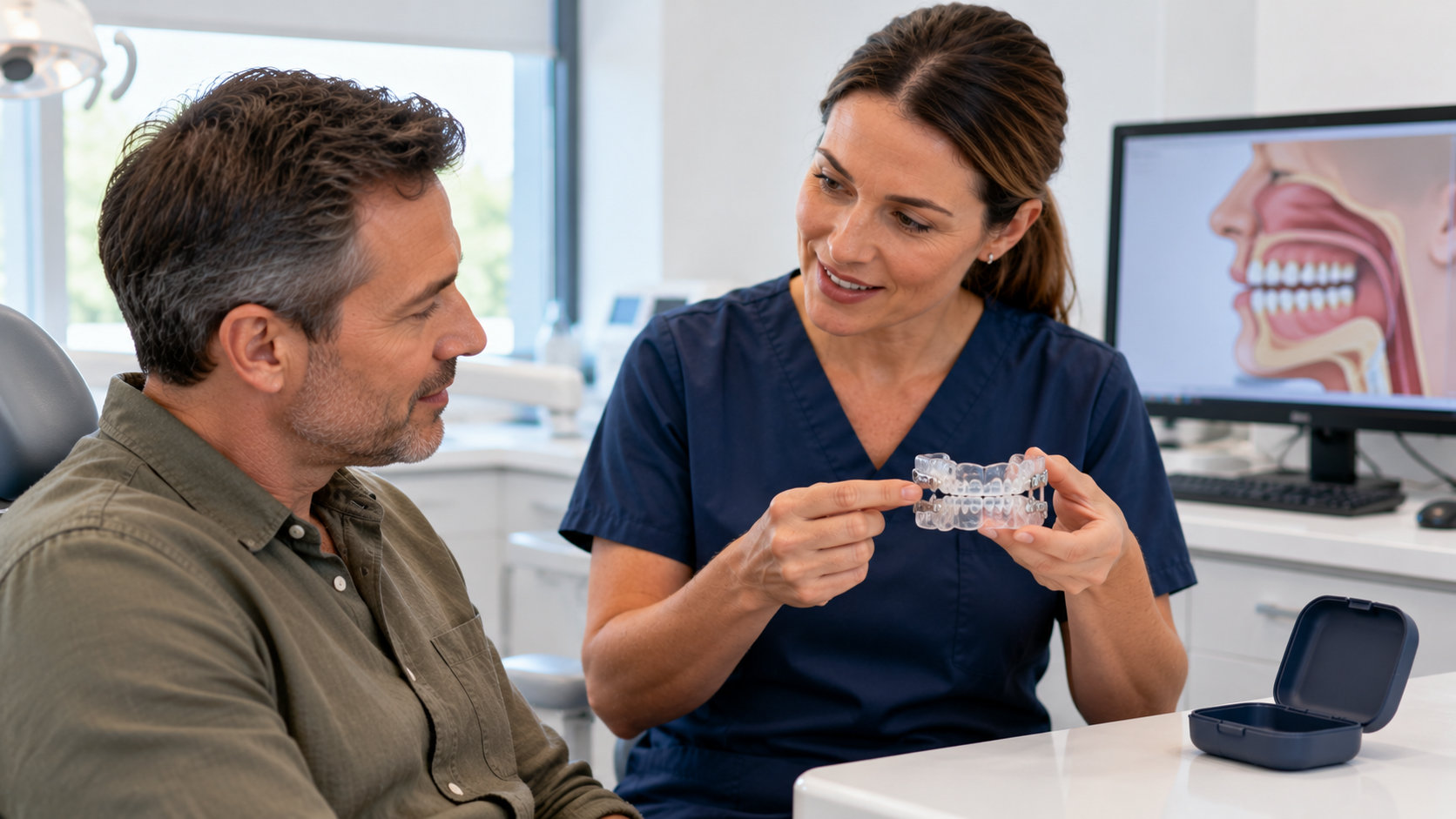
For some people with snoring or mild to moderate obstructive sleep apnoea, a custom-made dental appliance may be an option.
These devices are commonly called mandibular advancement splints.
They fit over the teeth and position the lower jaw slightly forward during sleep. This can create more space behind the tongue and may help reduce airway obstruction.
Oral appliances may also be considered for selected patients who cannot tolerate CPAP, depending on their medical assessment and treatment recommendations.
They are not suitable for everyone.
Potential side effects include jaw discomfort, changes in tooth position and bite changes, particularly with ongoing use.
A medical diagnosis and dental assessment are needed before deciding whether this type of treatment is appropriate.
Lifestyle Changes
Some people may benefit from changes such as:
- Maintaining a healthy weight
- Reducing alcohol consumption, particularly before bedtime
- Sleeping on their side rather than their back
- Managing nasal congestion
- Maintaining consistent sleeping habits
Lifestyle changes may help reduce symptoms, but they should not replace recommended medical treatment.
The appropriate approach depends on the severity of sleep apnoea and the individual’s overall health.
Can a Dentist Help With Sleep Apnoea?
Dentists can play a role in managing certain cases of obstructive sleep apnoea, particularly when oral appliance therapy has been recommended following a medical assessment.
At Oakstone Dental in Oakleigh, the dental team can discuss custom-made oral appliances for suitable patients experiencing snoring or diagnosed obstructive sleep apnoea.
These appliances are designed to reposition the lower jaw during sleep, which may help maintain a more open airway.
Before recommending an appliance, your dentist will generally assess:
- The health of your teeth and gums
- Your jaw joints and jaw movement
- Your bite and tooth positioning
- Whether your teeth can support an oral appliance
- Your medical diagnosis and treatment recommendations
The Oakstone Dental team can explain how dental sleep appliances work and whether this approach may be suitable based on your dental assessment and medical recommendations.
You can also find more information about sleep apnoea and snoring treatment options at Oakstone Dental.
Oral appliance therapy requires appropriate fitting, monitoring and follow-up. It is not a substitute for medical diagnosis or an alternative to CPAP for every patient.
When Should You Seek Help for Sleep Apnoea?
Consider speaking with your GP if you regularly wake up exhausted, experience loud snoring with breathing pauses or wake up gasping for air.
You should also seek medical advice if daytime tiredness is interfering with your concentration, work or daily activities.
Other reasons to arrange an assessment include:
- Your partner regularly notices pauses in your breathing.
- You frequently wake with headaches or a dry mouth.
- You struggle to stay awake during normal daytime activities.
- You experience ongoing, unexplained tiredness despite allowing enough time for sleep.
If you feel sleepy while driving, avoid driving until you have received appropriate medical advice.
Recognising the symptoms can help you understand what may be affecting your sleep and whether further investigation or treatment is needed.
Understanding Your Sleep and Treatment Options
Sleep apnoea is more than occasional snoring. It is a sleep disorder that can interrupt breathing and affect how rested you feel during the day.
If you suspect sleep apnoea, a medical assessment is the first step towards understanding your symptoms.
For patients in Oakleigh who have been advised to consider an oral appliance, Oakstone Dental can assess whether a dental sleep appliance may be suitable.
The decision will depend on your medical diagnosis, oral health, jaw condition and individual treatment needs.
If you have received a diagnosis and would like to discuss dental appliance options, contact Oakstone Dental or book a dental consultation online.
FAQs
Is sleep apnoea the same as snoring?
No. Snoring is the sound produced when tissues vibrate as air passes through a narrowed airway. Sleep apnoea involves repeated reductions or interruptions in breathing during sleep. Snoring can be a symptom of obstructive sleep apnoea, but not everyone who snores has the condition. A medical assessment is needed to determine whether sleep apnoea is present.
Can sleep apnoea happen without snoring?
Yes. Although loud snoring is common with obstructive sleep apnoea, some people experience breathing interruptions without noticeable snoring. Daytime tiredness, morning headaches and unrefreshing sleep may still occur. If you experience ongoing symptoms, speak with your GP about whether further assessment is needed.
Can a dentist diagnose sleep apnoea?
No. Sleep apnoea requires diagnosis by an appropriately qualified medical practitioner, usually following a clinical assessment and sleep study. A dentist can assess whether oral appliance therapy may be suitable once a medical diagnosis and appropriate treatment recommendation have been made.
Are dental appliances suitable for everyone with sleep apnoea?
No. Oral appliances are generally considered for suitable patients with snoring or mild to moderate obstructive sleep apnoea, and selected patients who cannot tolerate CPAP. Suitability depends on the medical diagnosis, oral health, jaw condition, bite and individual treatment needs. A dental assessment and appropriate medical recommendations are necessary before proceeding.