Can a Dentist Help with Snoring? Oral Appliance Treatment Explained
Snoring can be frustrating, especially when it starts affecting your sleep or keeping your partner awake. You might have tried sleeping on your side, changing pillows or using nasal strips without much improvement. But have you considered speaking with your dentist?
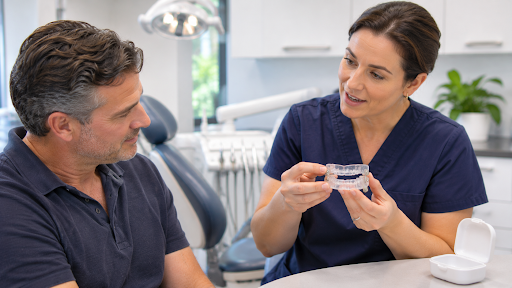
A dentist may be able to help with snoring through a treatment called oral appliance therapy. This involves wearing a specially designed dental device while sleeping to help keep your airway more open.
At Oakstone Dental in Oakleigh, oral appliances are available for suitable patients experiencing snoring and certain forms of sleep apnoea.
Before considering treatment, it helps to understand why snoring happens, how dental appliances work and whether they may be appropriate for you.
Why Do People Snore?
Snoring happens when air moves past relaxed tissues in your throat during sleep, causing them to vibrate.
When you fall asleep, the muscles supporting your tongue, soft palate and throat naturally relax. In some people, this narrows the airway and creates the familiar snoring sound.
Several factors can contribute to snoring, including:
- Sleeping on your back
- Being overweight
- Drinking alcohol before bedtime
- Nasal congestion or allergies
- Certain anatomical features of the jaw or airway
- Obstructive sleep apnoea
Occasional snoring may not indicate a serious problem. Persistent or loud snoring, particularly when accompanied by other symptoms, deserves further investigation.
Can Snoring Be a Sign of Sleep Apnoea?
Not everyone who snores has sleep apnoea. However, snoring is one of the common symptoms of obstructive sleep apnoea (OSA).
Obstructive sleep apnoea occurs when the upper airway repeatedly becomes partially or completely blocked during sleep. These interruptions can reduce airflow, disturb sleep and affect oxygen levels.
Other possible symptoms include:
- Gasping or choking during sleep
- Breathing pauses noticed by a partner
- Waking with a dry mouth or headache
- Feeling tired despite sleeping for several hours
- Difficulty concentrating during the day
If these symptoms sound familiar, speak with your GP or a sleep physician.
A dentist can recognise possible signs of sleep-disordered breathing, but diagnosing sleep apnoea requires an appropriate medical assessment, which may include a sleep study.
The Sleep Health Foundation’s information about obstructive sleep apnoea explains common symptoms, diagnosis and treatment approaches.
How Can a Dentist Help with Snoring?
A dentist’s role in snoring treatment involves assessing whether your teeth, jaw and oral health are suitable for a dental sleep appliance.
Some people snore partly because their tongue and surrounding tissues move backwards during sleep, narrowing the airway.
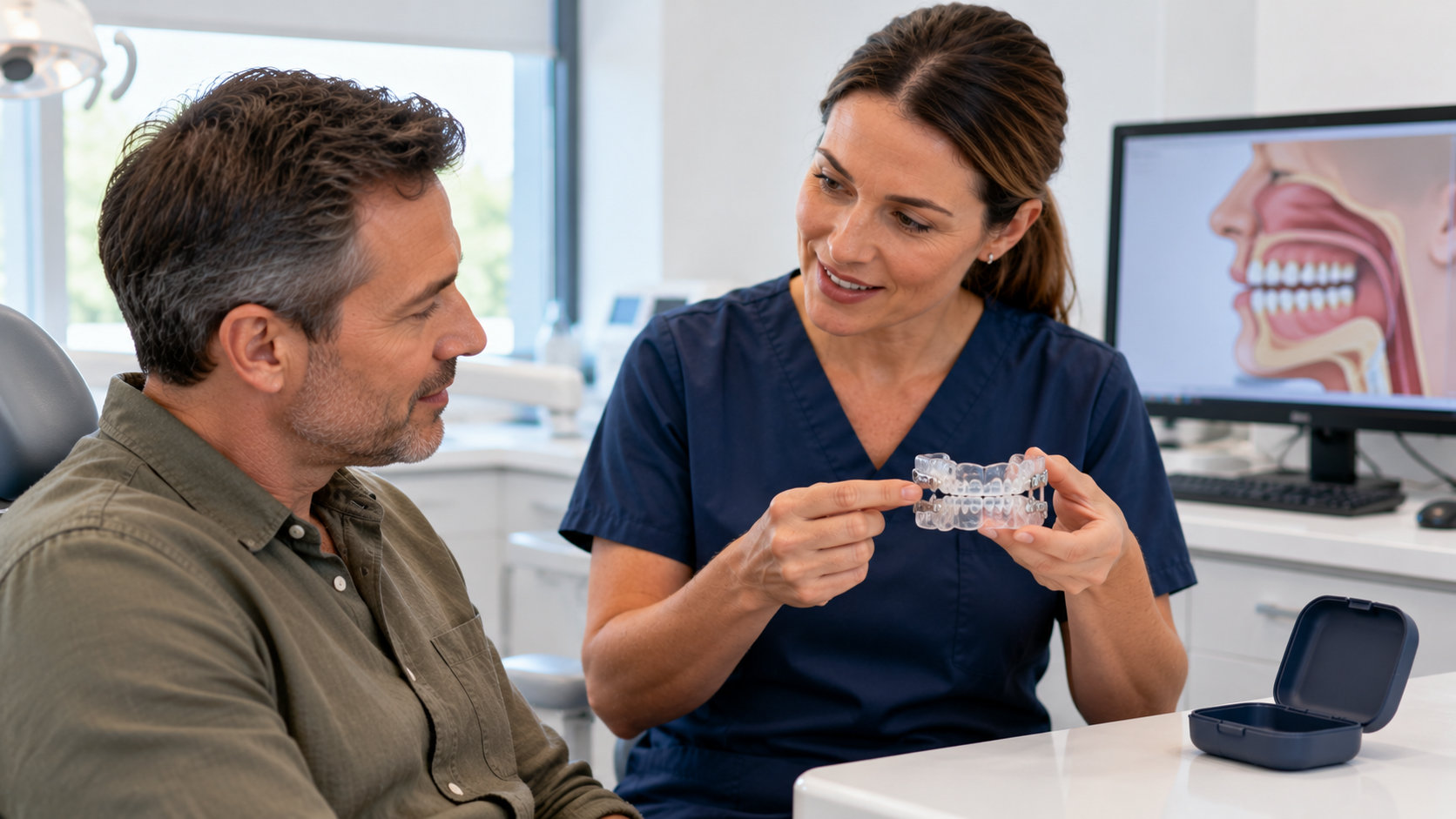
An oral appliance may help by gently positioning the lower jaw forward. This can create more space behind the tongue and reduce airway narrowing in suitable patients.
At Oakstone Dental, the team offers a dental appliance known as a dorsal appliance for suitable patients.
The aim is to reduce snoring and support more open airflow during sleep. Results vary, and an appliance does not eliminate snoring for everyone.
Before dental appliance treatment is considered, persistent snoring should be medically assessed to determine whether obstructive sleep apnoea is present.
What Is Oral Appliance Therapy?
Oral appliance therapy uses a device worn inside the mouth during sleep to help manage snoring or obstructive sleep apnoea.
One commonly used type is a mandibular advancement device. It looks somewhat like a mouthguard or dental retainer but serves a different purpose.
Unlike a regular sports mouthguard, the appliance is designed to hold your lower jaw slightly forward.
Potential advantages include:
- Compact design: The appliance is relatively small compared with some other sleep-related devices.
- Portability: It can be carried when travelling.
- No powered machine: It does not require electricity during use.
- Custom fitting: A professionally made appliance is designed to fit the patient’s teeth and jaw.
- Adjustability: Certain designs allow the dentist to adjust the position of the lower jaw.
However, an oral appliance must be appropriately fitted and monitored.
Buying a generic mouthguard online is not the same as receiving a professionally managed snoring appliance. An unsuitable or poorly fitted device may cause discomfort or dental changes.
Who May Be Suitable for Dental Snoring Treatment?
Oral appliances may be considered for adults with primary snoring or certain types of obstructive sleep apnoea.
They are commonly considered for patients with mild to moderate OSA following medical assessment. In some circumstances, they may also be recommended when someone cannot tolerate CPAP therapy.
Suitability depends on several factors, including:
- The medical diagnosis and severity of sleep apnoea
- The health of your teeth and gums
- The number and stability of your teeth
- Your jaw movement and bite
- Any existing jaw joint problems
- Your ability to wear and maintain the appliance
An appliance may not be appropriate if you have certain jaw problems, unstable teeth or significant untreated gum disease.
Your dentist and medical practitioner can help determine whether this treatment is suitable for your circumstances.
What Happens During a Dental Snoring Consultation?
If you are considering snoring treatment in Oakleigh, the first step is understanding your symptoms and oral health.
Discussing Your Sleep Concerns
Your dentist may ask how often you snore, whether anyone has noticed breathing interruptions and whether you experience daytime tiredness.
They may also discuss your medical history and any previous sleep assessments.
If sleep apnoea is suspected and has not been assessed, medical evaluation should take place before treatment decisions are made.
Checking Your Teeth and Jaw
Your dentist will examine your teeth, gums, bite and jaw movement to determine whether an appliance could be suitable.
They may also assess your jaw joints and any existing dental conditions that could affect appliance use.
Appliance Fitting and Adjustment
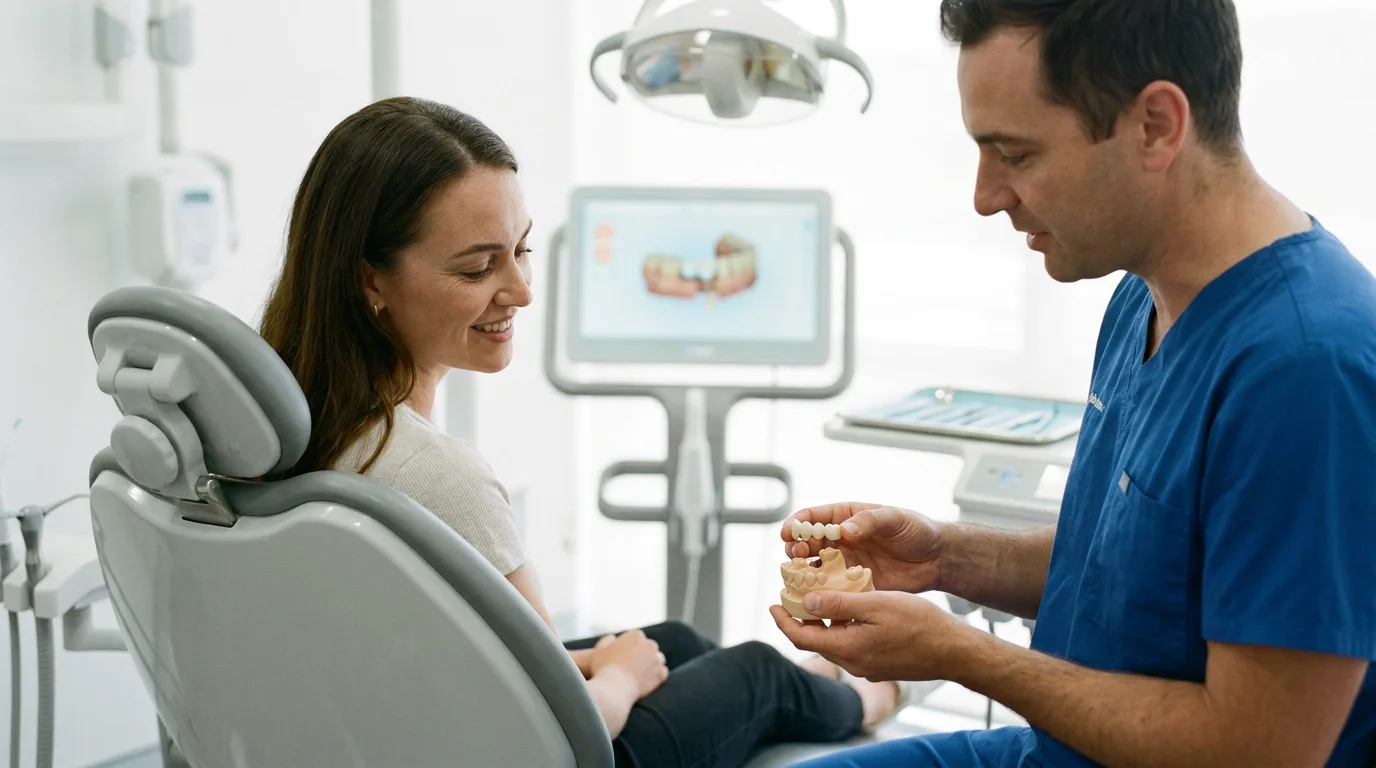
If oral appliance therapy is recommended, impressions or digital scans may be taken to make a device suited to your mouth.
Once fitted, the appliance may require adjustments to find an appropriate jaw position.
Follow-up appointments are needed to check comfort, monitor dental changes and assess treatment progress.
If you have sleep apnoea, your medical practitioner may recommend follow-up sleep testing to assess how effectively the appliance is managing the condition.
Oral Appliance Therapy vs CPAP: What’s the Difference?
Both treatments can help manage certain sleep-related breathing problems, but they work differently.
CPAP therapy delivers pressurised air through a mask to help keep the airway open during sleep. It is commonly recommended for obstructive sleep apnoea, particularly more severe cases.
Oral appliance therapy works by repositioning the lower jaw to reduce airway obstruction.
Here is how the two approaches compare:
| Factor | Oral Appliance Therapy | CPAP Therapy |
| How it works | Positions the lower jaw forward | Delivers pressurised air to keep the airway open |
| Equipment | Custom-made device worn inside the mouth | Machine, tubing and mask |
| Common uses | Primary snoring and suitable cases of obstructive sleep apnoea | Obstructive sleep apnoea, particularly moderate to severe cases |
| Portability | Small and does not require electricity | Requires a powered device |
| Possible side effects | Jaw discomfort, tooth movement and bite changes | Mask discomfort, dryness or air leakage |
| Monitoring | Dental reviews and medical follow-up | Medical reviews and device monitoring |
Oral appliances are smaller and do not require electricity, which some patients find convenient.
CPAP is generally more effective at reducing breathing interruptions in moderate to severe obstructive sleep apnoea. However, the effectiveness of either treatment also depends on appropriate use.
Neither option is automatically suitable for everyone.
The recommended approach depends on your diagnosis, treatment needs, medical advice and ability to use the device consistently.
Are There Side Effects of Oral Appliance Therapy?
Like other dental treatments, oral appliances have potential disadvantages.
Some patients experience temporary symptoms while adjusting to the device, including:
- Jaw soreness or stiffness
- Increased saliva
- Dry mouth
- Tooth discomfort
- Changes in how the teeth meet when biting
Long-term use may also affect tooth position or the bite.
These are reasons why professional fitting and regular monitoring matter.
Your dentist can assess any discomfort and make adjustments where appropriate.
If you develop persistent jaw pain, changes in your bite or other concerns, contact your treating dentist rather than adjusting the appliance yourself.
Can You Reduce Snoring Without a Dental Appliance?
Not every person who snores needs an oral appliance.
Depending on the cause, some lifestyle changes may help reduce snoring.
Changing Your Sleeping Position
Sleeping on your side may help if you mainly snore while lying on your back.
For some people, sleeping position affects how the tongue and surrounding tissues narrow the airway.
Reducing Alcohol Before Bed
Alcohol can relax the muscles around the airway and may make snoring worse.
Reducing alcohol consumption, particularly before bedtime, may help some people.
Managing Nasal Congestion
Blocked nasal passages caused by allergies, congestion or other conditions may contribute to snoring.
Your GP can assess persistent nasal symptoms and discuss suitable management options.
Maintaining a Healthy Weight
For people who are overweight, weight management may help reduce snoring and obstructive sleep apnoea symptoms.
However, snoring and sleep apnoea can also affect people who are not overweight.
Lifestyle measures are not a replacement for medical treatment when obstructive sleep apnoea is present.
If snoring continues or you notice breathing interruptions, seek professional advice rather than relying on home remedies alone.
Discuss Snoring Treatment at Oakstone Dental in Oakleigh
If snoring is regularly disturbing your sleep or your partner’s rest, understanding the cause is a sensible first step.
Oakstone Dental in Oakleigh offers consultations to discuss dental appliance options for suitable patients.
The Oakstone Dental team can assess your oral health, explain how an appliance works and discuss its possible benefits, limitations and risks.
Where sleep apnoea is suspected, medical assessment is needed to guide appropriate treatment.
You can find more information about sleep apnoea and snoring treatment at Oakstone Dental.
If you have already received a medical assessment and would like to explore dental appliance options, contact Oakstone Dental or book a dental consultation online.
FAQs
Can a dentist really help you stop snoring?
A dentist may help reduce snoring by providing a suitable oral appliance that positions the lower jaw forward during sleep. However, treatment results vary, and complete elimination of snoring cannot be guaranteed. Persistent snoring should first be medically assessed to rule out obstructive sleep apnoea.
Is oral appliance therapy suitable for sleep apnoea?
Oral appliance therapy may be suitable for some people with mild to moderate obstructive sleep apnoea. It may also be considered in certain other cases, including selected patients who cannot tolerate CPAP. A GP or sleep physician should establish the diagnosis, while a dentist assesses whether the patient’s teeth, gums and jaw can support the appliance.
How much does a dental snoring appliance cost?
The cost depends on the appliance type, assessment requirements, fitting, adjustments and follow-up care. Fees can vary between patients and dental practices. Your dentist can explain the expected costs after determining whether oral appliance therapy is suitable for your individual circumstances.
Is a snoring appliance the same as a nightguard?
No. A conventional nightguard generally protects teeth against grinding or clenching. A snoring appliance is designed to position the lower jaw forward to help manage airway narrowing during sleep. The devices have different purposes and should be fitted according to the patient’s clinical needs.
How long does it take to get used to an oral appliance?
Adjustment time varies between patients. Some people adapt relatively quickly, while others need more time or appliance adjustments. Temporary jaw soreness, tooth discomfort or changes in saliva may occur. Regular dental reviews help monitor comfort, fit and possible side effects.