For most adults, a good starting point is a fluoride toothpaste used twice daily with effective brushing at the gumline. If you are prone to gingivitis, a formulation containing stannous fluoride may offer additional plaque and gingival benefits. Sensitivity and tartar-control ingredients can also be useful for particular problems, but no toothpaste can remove established tartar or treat periodontitis by itself.
Choosing toothpaste can be confusing because packaging often makes several claims at once: gum care, whitening, sensitivity relief, tartar control, enamel protection and fresh breath.
The original advice on this page focused on choosing toothpaste with appropriate active ingredients and combining it with consistent brushing and flossing. Those principles remain important. What matters is understanding which ingredients have a useful role, what problem they are intended to address, and where professional dental care is still necessary.
What Ingredients Should You Look for in Toothpaste for Healthy Gums?
There is no single ingredient that makes one toothpaste the “best” choice for everybody.
For an adult concerned about gum health, these are the main ingredient categories worth understanding.
| Ingredient or formulation | What it may help with | Important limitation |
| Fluoride | Protecting teeth against decay | Essential for tooth protection, but does not remove tartar or treat periodontitis |
| Stannous fluoride | Fluoride protection plus evidence of additional benefits for plaque and gingivitis | Still relies on effective brushing and interdental cleaning |
| Desensitising ingredients | Sensitive exposed tooth or root surfaces | Relieve symptoms but do not diagnose or correct the cause |
| Tartar-control ingredients | Reducing new calculus build-up | Cannot remove tartar that has already hardened |
| High-concentration sodium bicarbonate formulations | Some evidence supports improved plaque and gingival measures in people with gingivitis | Not essential for everyone and not a treatment for periodontitis |
The ingredient list matters, but so does whether you use the toothpaste properly. Toothpaste cannot compensate for brushing quickly, missing the gumline or never cleaning between the teeth.
Fluoride Should Be the Starting Point for Most Adults
Fluoride is the most important toothpaste ingredient for protecting teeth against decay.
Common fluoride ingredients include sodium fluoride, sodium monofluorophosphate and stannous fluoride. Adult toothpastes sold in Australia commonly contain around 1000 to 1450 parts per million of fluoride.
You can read more about the role of fluoride in toothpaste and how it helps protect enamel.
Fluoride is sometimes described as a “gum health” ingredient, but its clearest established role is preventing tooth decay. Healthy gums still depend primarily on controlling plaque around the gumline through effective brushing and interdental cleaning.
People at particularly high risk of tooth decay may sometimes be advised to use a higher-fluoride product. That is something to discuss with your dentist rather than choosing a stronger formulation without guidance.
What About Stannous Fluoride?
Stannous fluoride is one of the fluoride compounds used in toothpaste.
Like other fluoride formulations, it helps protect against tooth decay. It also has antimicrobial properties, and systematic reviews have found that some stannous fluoride toothpastes provide additional improvements in plaque and measures of gingivitis compared with conventional fluoride toothpastes. The size of the benefit varies between formulations and studies.
This makes stannous fluoride a reasonable ingredient to consider if you are particularly concerned about plaque accumulation or gingivitis.
It does not mean that a stannous fluoride toothpaste can treat established periodontitis on its own.
Can Toothpaste Prevent Gum Disease?
Toothpaste can support a good prevention routine, but the physical removal of plaque is crucial.
Gingivitis develops when plaque accumulates along the gumline. Regular gentle brushing can help prevent it, particularly when brushing is combined with daily cleaning between the teeth.
For effective home care:
Brush your teeth and gumline twice a day with a soft toothbrush and fluoride toothpaste. Clean between your teeth daily using floss or an interdental aid suited to your mouth. Take enough time to reach the back teeth and areas where plaque commonly collects.
The choice of toothpaste can improve the routine, but it is not the routine itself.
Why Toothpaste Cannot Treat Periodontitis by Itself
This distinction is particularly important.
Gingivitis affects the gums and can improve when plaque is controlled effectively. Periodontitis is a more advanced condition in which the tissues supporting the teeth are affected and periodontal pockets may develop.
Once tartar and bacterial deposits are present below the gumline, toothpaste cannot reach and remove them adequately. Professional treatment may involve removing plaque and tartar from the teeth and root surfaces, together with individual home-care instruction.
Oakstone Dental’s guide to periodontal pockets and gum disease explains why deeper areas around the teeth become more difficult to clean at home.
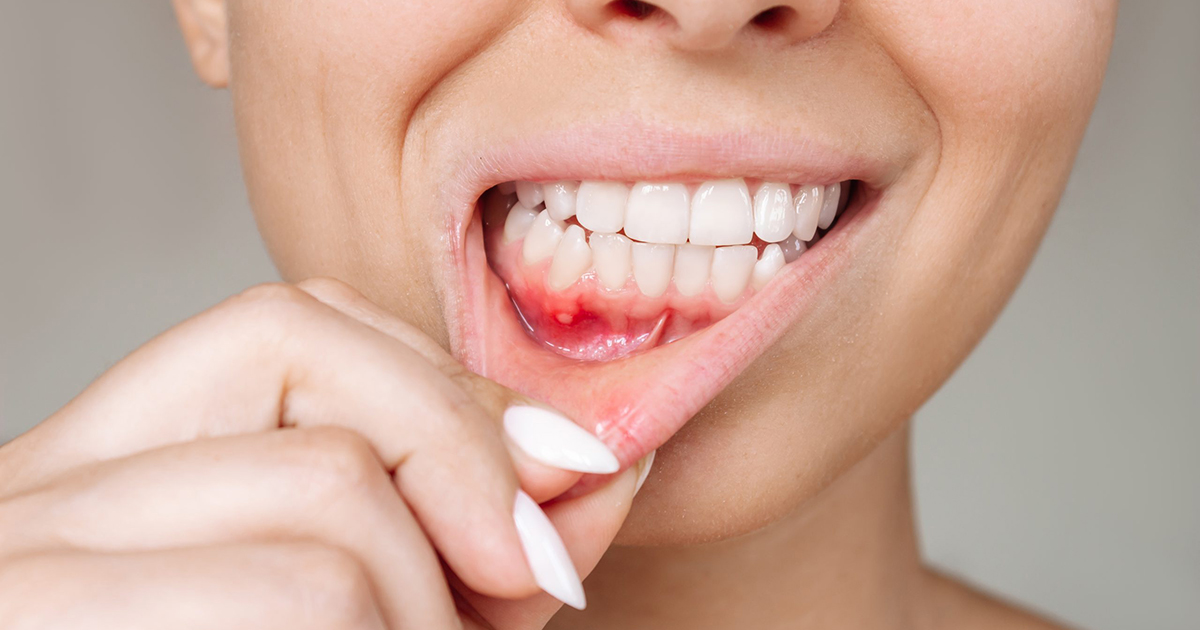
If you already have bleeding gums, gum recession, persistent bad breath, loose teeth or known periodontal pockets, changing toothpaste should not be treated as a substitute for an assessment.
What Toothpaste Is Best for Bleeding Gums?
If the bleeding is caused by plaque-related gingivitis, improving plaque removal is more important than simply searching for a toothpaste labelled “for bleeding gums”.
A fluoride toothpaste is a sensible foundation. A stannous fluoride formulation may provide an additional benefit for gingival health in some people. High-concentration sodium bicarbonate toothpastes have also shown improvements in plaque and bleeding measures in several studies of people with gingivitis, although the evidence is not a reason to regard baking soda as essential for everybody.
Persistent bleeding should still be assessed. Gum disease can progress without causing significant pain, and toothpaste cannot tell you whether inflammation is limited to gingivitis or has developed into periodontitis.
A dental check-up and professional clean allows the gums to be examined and tartar to be removed where necessary. Oakstone Dental also provides practical home-care guidance based on the areas that are difficult for an individual patient to clean.
Do Tartar-Control Toothpastes Help the Gums?
They can have a supporting role, but it is important to understand what the term means.
Plaque can mineralise and become calculus, commonly called tartar. Toothpastes may contain ingredients such as pyrophosphates, zinc citrate or sodium hexametaphosphate to help decrease new calculus formation.
They cannot remove tartar that is already firmly attached to the teeth.
Established calculus requires professional removal. If you can feel hard, rough deposits around your teeth despite brushing, switching to a tartar-control toothpaste will not make those deposits disappear.
What If You Have Sensitive Teeth or Receding Gums?
Gum recession can expose root surfaces and make teeth sensitive to cold, sweet foods, touch or brushing.
Desensitising toothpastes may contain ingredients such as:
- potassium nitrate
- stannous fluoride
- arginine
- strontium chloride
- calcium sodium phosphosilicate
These formulations generally work by reducing the response of the tooth’s nerves or forming a barrier over sensitive areas.
They can be useful when sensitivity is genuinely coming from an exposed sensitive surface.
However, sensitivity can also be caused by decay, erosion, a damaged filling or other dental problems. A sensitivity toothpaste may ease symptoms without dealing with that cause. Persistent or new sensitivity is therefore worth having checked.
Is Baking Soda Toothpaste Good for Gum Health?
Some formulated toothpastes containing a high concentration of sodium bicarbonate have evidence supporting improved plaque removal and gingival measures.
A 2022 systematic review of seven randomised controlled trials found improvements in plaque, bleeding and gingival indices with 67% sodium bicarbonate toothpaste compared with control formulations. The quality of individual studies varied.
That does not mean you need to brush with loose household baking soda or make your own toothpaste.
The evidence relates to formulated dental products. For most people, fluoride content and effective cleaning remain more important considerations when selecting an everyday toothpaste.
Are Herbal or “Natural” Toothpastes Better for the Gums?
Do not assume a toothpaste is more effective simply because it is labelled natural, herbal, detoxifying or chemical-free.
Some botanical ingredients are being studied, but marketing language is not the same as evidence that a product prevents or treats periodontal disease.
A more practical way to compare products is to look at:
- whether the toothpaste contains fluoride
- which additional active ingredients are present
- whether those ingredients address a problem you actually have
- whether you can comfortably use the toothpaste twice each day
If a fluoride-free product is being considered, particularly for an adult at risk of decay, it is worth discussing that choice with your dentist first. Current Australian dental guidance recommends fluoride toothpaste for adults.
What About Charcoal and Whitening Toothpastes?
A whitening label does not mean a toothpaste is better for gum health.
Whitening formulations are generally designed to reduce surface staining or alter tooth colour. Gum disease, by contrast, is primarily related to plaque accumulation and the inflammatory response around the teeth.
If gum health is your priority, choose toothpaste based on oral-health needs rather than how strongly the packaging emphasises whitening.
Likewise, an abrasive or intensely flavoured product is not necessarily cleaning your gums more effectively simply because your mouth feels polished or strongly minty afterwards.
Should You Avoid Sodium Lauryl Sulfate?
Sodium lauryl sulfate, usually abbreviated to SLS, is a surfactant used in many toothpastes to help spread the product and produce foam.
Most people do not need to avoid it simply for gum health.
There is some evidence that people who experience recurrent aphthous ulcers may have fewer or less troublesome ulcers when using an SLS-free toothpaste. The evidence is limited, however, and this is different from saying SLS causes gum disease.
If a toothpaste repeatedly causes burning, peeling or irritation inside your mouth, changing formulation and discussing the symptoms with your dentist may be appropriate.
Toothpaste Claims That Deserve a Closer Look
Toothpaste marketing often uses phrases that sound more powerful than the product’s realistic role.
Be cautious about interpreting claims such as:
“Reverses gum disease.”
Early gingivitis may improve when plaque is controlled, but established periodontitis requires professional management.
“Removes tartar.”
A toothpaste may help reduce future tartar formation. It cannot remove established calculus from the teeth.
“Repairs receding gums.”
A toothpaste cannot regrow lost gum tissue. A sensitivity product may make an exposed root surface more comfortable.
“Detoxifies gums.”
This is not a useful clinical description of periodontal treatment.
“Kills bacteria.”
Reducing particular bacteria in laboratory or product testing does not mean the toothpaste replaces physical plaque removal, interdental cleaning or dental treatment.
The most impressive statement on the front of a tube is not necessarily the most important feature.
How to Use Toothpaste Effectively
The original version of this article correctly emphasised that choosing toothpaste is only one part of the routine.
For adults, use a pea-sized amount and brush gently for around two minutes twice each day. Pay attention to the gumline rather than brushing only the centre of the teeth. After brushing, spit out the excess toothpaste rather than immediately rinsing it all away with water.
Cleaning between the teeth is equally important for gum health because a toothbrush cannot effectively reach every surface where neighbouring teeth meet.
If floss is difficult to use, ask whether an interdental brush or another cleaning aid is more appropriate for your teeth.
How Do You Know Whether Your Toothpaste Is Working?
A toothpaste should be judged as part of your overall oral-health routine rather than by how fresh your mouth feels immediately after brushing.
Healthy gums generally should not remain persistently red, swollen or prone to bleeding.
Arrange an assessment if you notice:
- bleeding that continues despite careful home cleaning
- receding or swollen gums
- persistent bad breath or an unpleasant taste
- sensitive exposed roots
- hard tartar around the teeth
- teeth becoming loose or changing position
These signs may require professional diagnosis and treatment rather than another change of toothpaste.
Oakstone Dental’s general dentistry service includes gum disease care as part of its broader approach to maintaining oral health. Treatment recommendations are discussed with patients so they understand the available options and why a particular approach may be appropriate.
Frequently Asked Questions About Toothpaste and Gum Health
What is the best toothpaste ingredient for healthy gums?
There is no single ingredient that is best for everyone. For most adults, fluoride toothpaste is the foundation because it protects against tooth decay. If plaque-related gingivitis is a concern, a stannous fluoride formulation may offer additional benefits for plaque and gingival health. Your brushing and interdental cleaning technique remain just as important as the formulation.
Is stannous fluoride better than sodium fluoride for gums?
Stannous fluoride has additional antimicrobial properties, and studies suggest that some stannous fluoride formulations can improve measures of plaque and gingivitis compared with conventional fluoride toothpastes. Sodium fluoride remains an effective fluoride source for decay prevention. The most appropriate product depends on your priorities and oral-health needs.
Can toothpaste cure gingivitis?
Toothpaste can support the control of gingivitis when it is used with thorough brushing and daily interdental cleaning. The important factor is removing plaque consistently from around the gumline.
If bleeding and inflammation continue despite good home care, professional cleaning or further assessment may be required.
Can toothpaste cure periodontitis?
No. Toothpaste alone cannot treat established periodontitis.
Periodontitis can involve deeper periodontal pockets, tartar and bacterial deposits that cannot be adequately reached with a toothbrush. Professional periodontal care is needed to assess and manage the condition.
Which toothpaste is best if my gums have receded and my teeth are sensitive?
A desensitising fluoride toothpaste may help if exposed root surfaces are causing sensitivity. Ingredients such as potassium nitrate, stannous fluoride and arginine are used in sensitivity formulations. Because sensitivity can also result from decay, erosion or damaged restorations, new or persistent symptoms should be examined rather than managed indefinitely with toothpaste alone.
Will tartar-control toothpaste remove tartar from my teeth?
No. Tartar-control ingredients can help reduce the formation of new calculus, but they cannot remove deposits that have already hardened onto your teeth. Established tartar requires professional cleaning.
Should I buy toothpaste specifically labelled for gum disease?
Not necessarily. Read the active ingredients rather than relying only on the front label.
For most adults, look first for fluoride. If you have a particular concern such as gingivitis, sensitivity or rapid tartar build-up, an appropriate additional active ingredient may be useful. Persistent gum problems still need professional assessment.
Why are my gums still bleeding after changing toothpaste?
Changing toothpaste may not address the underlying reason for bleeding.
Plaque left around or between the teeth, tartar, gingivitis and periodontitis can all contribute. If you have improved your brushing and interdental cleaning but your gums continue to bleed, arrange a dental examination.
Choosing Toothpaste Is Only One Part of Healthy Gum Care
For most adults, there is no need to chase whichever toothpaste currently makes the biggest marketing promise.
Choose a fluoride toothpaste that you can use consistently. Consider a formulation with an additional evidence-supported ingredient when you have a specific need, such as gingivitis or tooth sensitivity.
Then concentrate on what matters most: brushing thoroughly twice a day, cleaning between your teeth, and having persistent bleeding, tartar or periodontal problems assessed professionally.
If you are unsure whether your gum symptoms can be managed through better home care or require treatment, a check-up and clean at Oakstone Dental allows your teeth and gums to be examined and gives you the opportunity to discuss which toothpaste and cleaning tools suit your individual needs.