Introduction
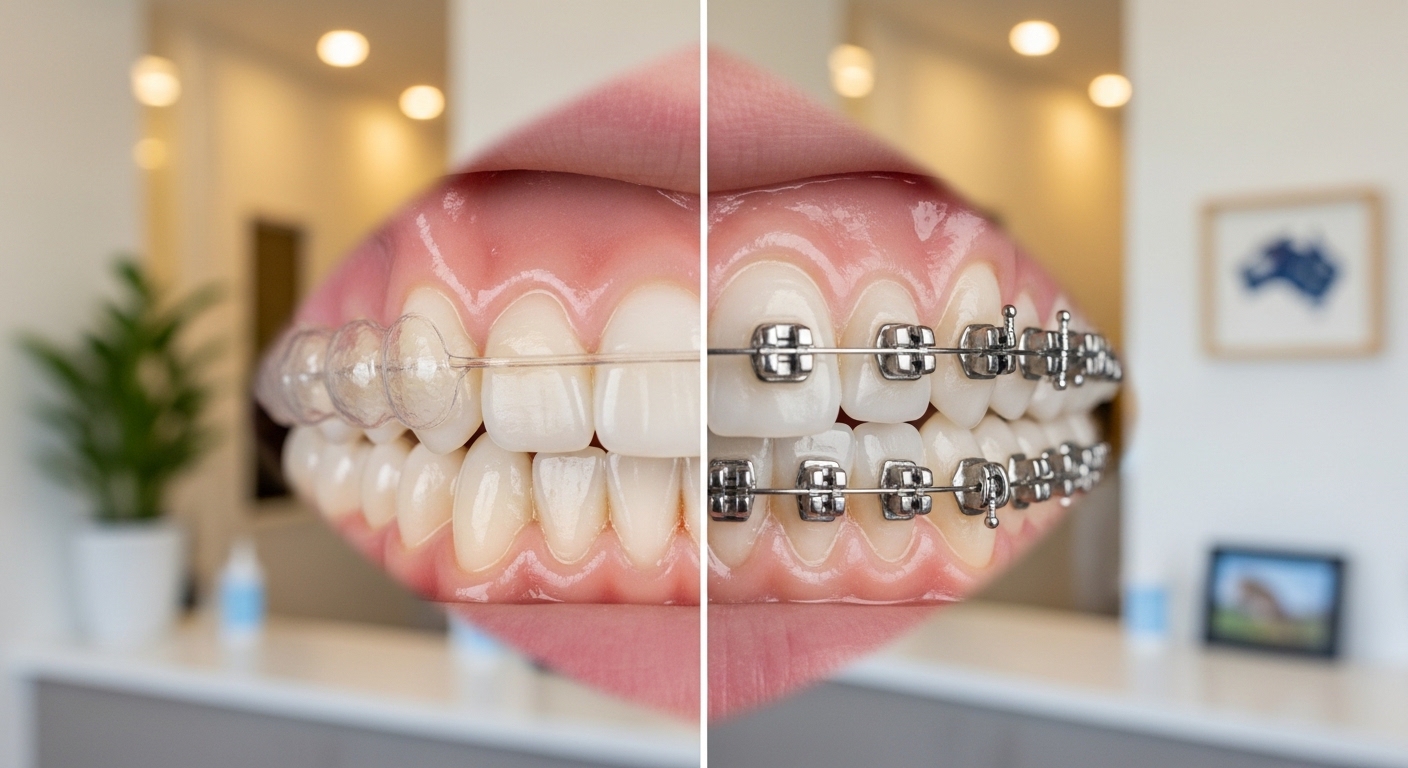
When comparing Invisalign vs braces, the right choice comes down to your lifestyle, the complexity of your case, and your personal preferences. Invisalign offers a discreet, removable option, while braces provide a more traditional and highly controlled method for complex tooth movement.
If you’ve been wondering Invisalign or braces which is better, or comparing braces vs Invisalign cost in Australia, this guide will walk you through everything you need to know.
At our clinic, we help patients make confident decisions based on what suits their goals, not just what’s popular. In this article, we’ll break down the differences, costs, pros and cons, and help you decide which option is right for you.
Invisalign vs Braces: What’s the Main Difference?
Quick Answer
- Invisalign: Clear, removable aligners that gradually move teeth
- Braces: Fixed brackets and wires that stay on your teeth throughout treatment
How Each Treatment Works
Invisalign
- Uses a series of custom-made clear aligners
- Each set is worn for 1–2 weeks
- Teeth gradually shift over time
Braces
- Brackets are bonded to teeth
- Wires apply continuous pressure
- Adjustments are made regularly in-clinic
If you’d like to explore how clear aligners work in more detail, you can view our Invisalign treatment options.
Invisalign vs Braces Australia: Which Is More Popular?
Short Answer
Invisalign is more popular among adults, while braces are still common for teens and complex cases.
What We See in Practice
- Adults often choose Invisalign for appearance and flexibility
- Teens may still opt for braces, especially for more involved corrections
At our clinic, both options are used depending on what will deliver the best long-term result.
Invisalign or Braces: Which Is Better for You?
Quick Answer
- Choose Invisalign if you want a discreet, flexible option
- Choose braces if you need more complex corrections
Real-World Example
We often see patients with mild crowding achieve great results with Invisalign. However, cases involving significant bite issues or tooth rotation may benefit more from braces.
If you’re unsure, the best step is a proper assessment. You can learn more about our team and how we plan treatments.
Braces vs Invisalign Cost in Australia
Average Cost Comparison
| Treatment Type | Cost Range (AUD) |
| Invisalign | $4,500 – $9,000 |
| Braces | $5,000 – $8,500 |
Short Answer
Costs are similar, but Invisalign can be slightly higher depending on the case.
What Affects the Cost
- Complexity of alignment
- Treatment duration
- Number of adjustments or aligners
- Technology used
You can also explore your options and get a personalised quote through our online booking system.
Clear Aligners vs Braces: Pros and Cons
Invisalign (Clear Aligners)
Pros
- Nearly invisible
- Removable for eating and cleaning
- More comfortable (no wires or brackets)
- Fewer emergency visits
Cons
- Must be worn 20–22 hours daily
- Not ideal for all complex cases
- Can be lost or misplaced
Braces
Pros
- Effective for complex cases
- No need to remember to wear them
- Consistent force on teeth
Cons
- Visible
- Can cause irritation
- Food restrictions apply
- More maintenance required
Which Is Faster: Invisalign or Braces?
Short Answer
Both can take similar timeframes, typically 6 to 24 months.
What Affects Treatment Time
- Severity of alignment issues
- Patient compliance (especially with Invisalign)
- Biological response of teeth
Patients who wear Invisalign consistently often finish within expected timelines.
Which Is More Comfortable?
Short Answer
Invisalign is generally more comfortable.
Why
- No metal brackets or wires
- Smooth plastic aligners
- Less irritation to cheeks and gums
Braces may cause discomfort after adjustments, especially in the early stages.
Which Looks Better?
Short Answer
Invisalign is far less noticeable.
Why It Matters
Many adult patients choose Invisalign because:
- It’s discreet in social and professional settings
- It doesn’t affect confidence during treatment
Which Is Easier to Maintain?
Invisalign
- Remove aligners to eat
- Brush and floss normally
Braces
- Require careful cleaning around brackets
- Flossing is more time-consuming
- Higher risk of plaque build-up
Are There Any Risks?
Short Answer
Both are safe when managed by a qualified dentist.
Invisalign Risks
- Not wearing aligners enough can delay results
- May not suit complex cases
Braces Risks
- Higher chance of plaque build-up
- Potential for broken brackets
To ensure safe and regulated care, you can refer to the Australian Dental Association for general oral health guidance.
Who Is Invisalign Best For?
Ideal Candidates
- Mild to moderate alignment issues
- Adults or teens wanting discreet treatment
- Patients committed to wearing aligners consistently
Who Are Braces Best For?
Ideal Candidates
- Complex bite issues
- Significant crowding or rotation
- Patients who prefer a fixed solution
What Is the Treatment Process Like?
Invisalign Process
- Consultation and scan
- Custom aligner plan
- Wear aligners daily
- Progress checks
- Retainers
Braces Process
- Consultation
- Brackets bonded to teeth
- Regular adjustments
- Removal after treatment
- Retainers
You can explore more about our services on our clinic website.
Quick Answers (FAQ)
Is Invisalign better than braces?
It depends on your case. Invisalign is better for comfort and appearance, while braces are better for complex corrections.
Are braces cheaper than Invisalign?
They are usually similar in cost, though braces may be slightly cheaper in some cases.
Can Invisalign fix everything braces can?
Not always. Complex movements may still require braces.
Which is faster, Invisalign or braces?
Both can take similar time, depending on your case and compliance.
Do braces hurt more than Invisalign?
Generally yes, especially after adjustments.
Conclusion
When it comes to Invisalign vs braces, there’s no one-size-fits-all answer.
- Invisalign suits patients who want flexibility and a discreet option
- Braces remain the best choice for more complex cases
The most important step is getting a personalised assessment. That way, you’ll know exactly what will work for your smile.If you’re considering treatment, you can contact our team to book a consultation and get clear advice tailored to you.